Southern Thailand, particularly Phuket, Phang Nga, and Krabi, ranks among the most popular destinations in the world. Travelers from Europe, Asia, and the Middle East come to experience unspoiled nature — emerald seas, dramatic limestone islands, and mangrove forests teeming with vital ecosystems. The three provinces sit close together, making it easy to explore them continuously in a single trip. Many visitors plan island-hopping itineraries covering multiple provinces within just a few days. This article compiles the key natural landmarks worth knowing in Phuket, Phang Nga, and Krabi, along with travel information, highlights, and the reasons these places have become world-class destinations.
Why Phuket, Phang Nga, and Krabi Are World-Class Natural Areas
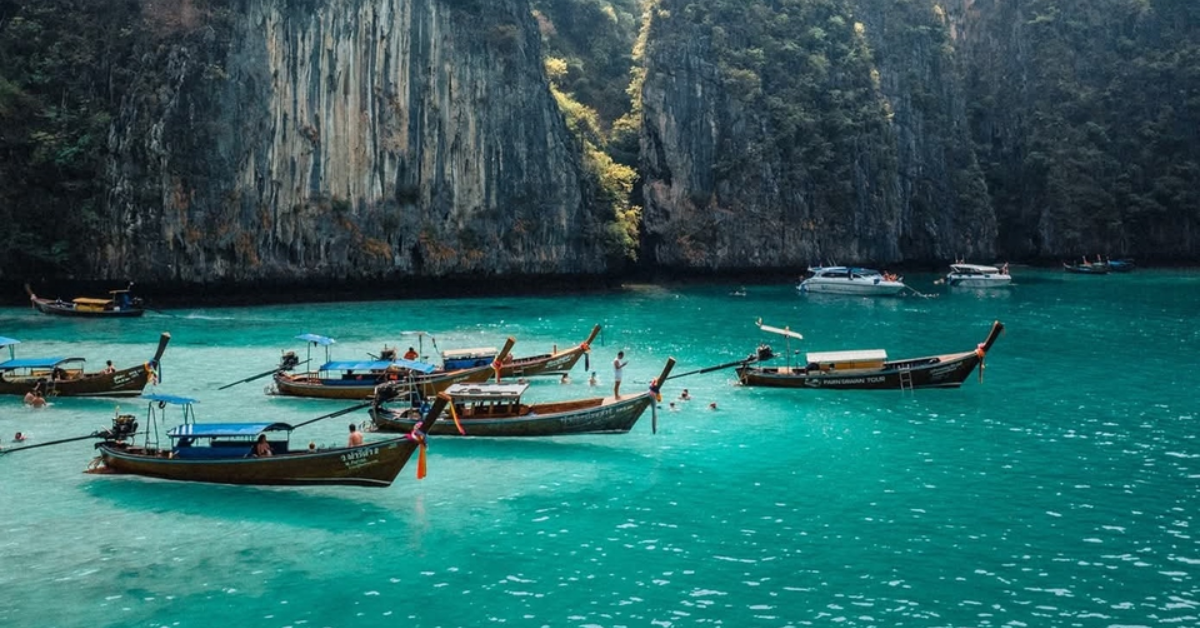
The Andaman coastline has a distinctive landscape shaped by over 250 million years of geological change. What makes this region stand out includes limestone mountains, unusually shaped islands, sea caves, natural lagoons, large mangrove forests, and coral reefs. This combination has made the area one of the world’s Marine Biodiversity Hotspots.
Natural Landmarks in Phuket
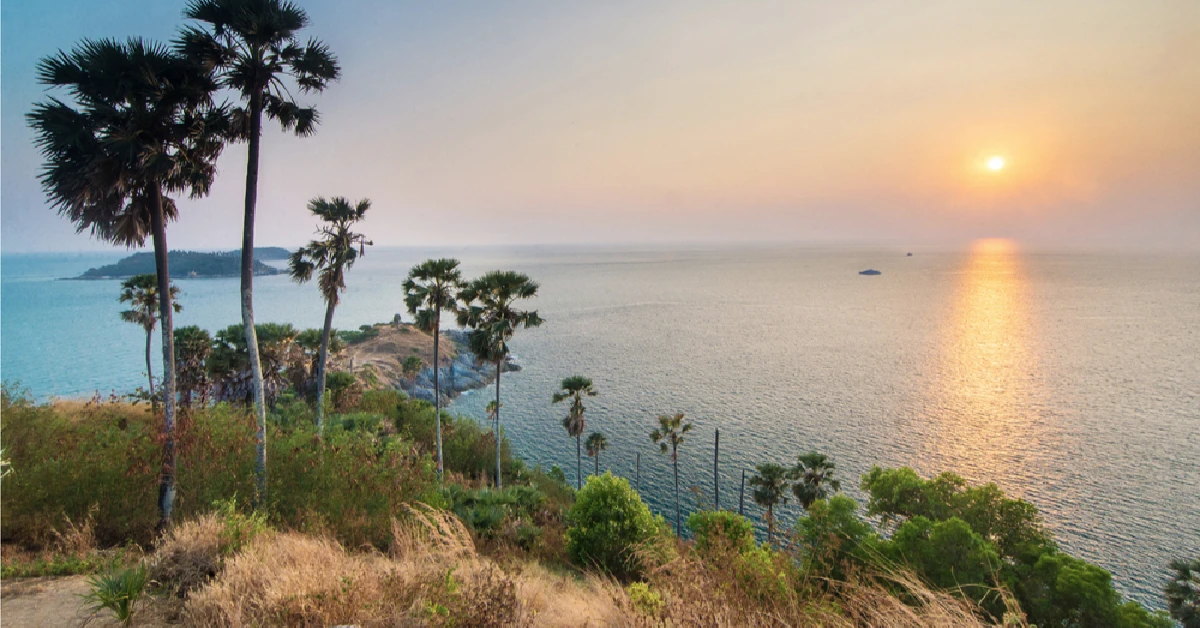
Promthep Cape
Phuket’s most famous natural landmark. Known for panoramic Andaman Sea views and one of Thailand’s finest sunsets, it draws thousands of visitors every evening during peak season. Located at the southern tip of Phuket, about 30 minutes from Phuket Town, near Nai Harn Beach.
Nai Harn Beach
One of Phuket’s most naturally preserved beaches, with clear water and fine white sand, ideal for swimming from November through April. The surrounding area also features Nai Harn Lake, small hiking trails, and the Windmill Viewpoint.
Laem Krating
A growing favorite in recent years — a rocky headland jutting into the sea with sunset views and undeveloped surroundings. A short 20-minute walk keeps this spot quiet and peaceful.
Natural Landmarks in Phang Nga
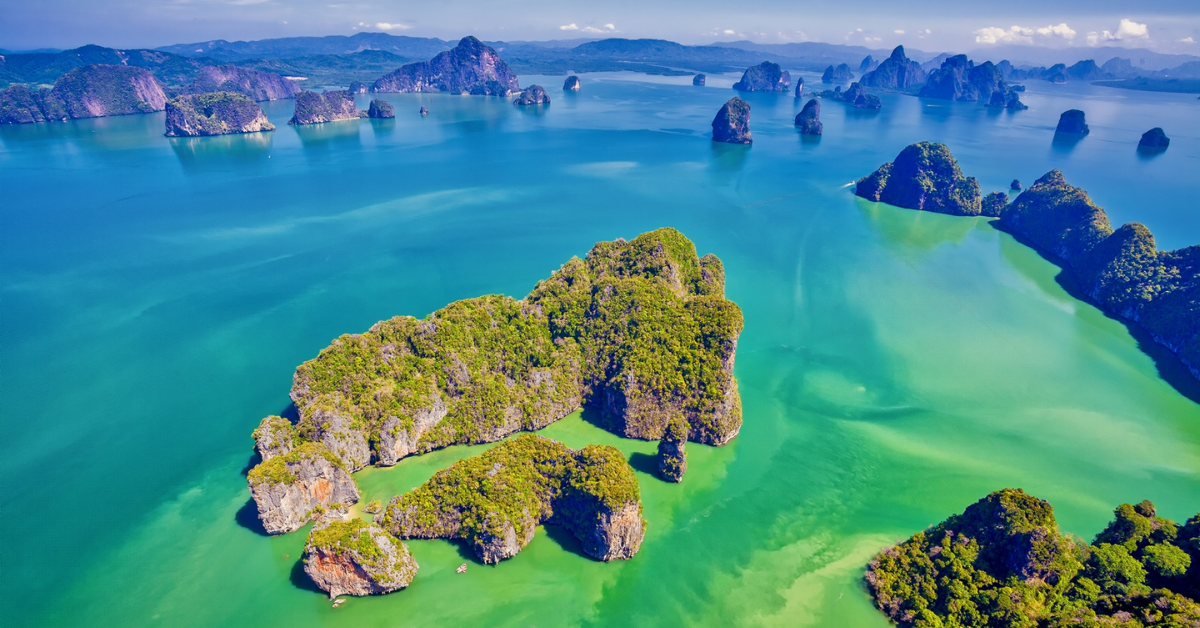
Phang Nga Bay
A world-renowned natural area featuring over 40 limestone islands, sea caves, and natural lagoons — often compared to Halong Bay in Vietnam. Popular activities include sea kayaking and island-hopping boat tours, with kayaking through caves and lagoons being a highlight for many visitors.
James Bond Island (Koh Tapu)
This towering limestone pillar rising from the sea became a global icon after featuring in The Man with the Golden Gun. It attracts hundreds of thousands of visitors each year.
Koh Panyi
A fishing village built on stilts in the middle of Phang Nga Bay, surrounded by stunning limestone scenery. Most visitors stop here for fresh seafood before continuing to other islands.
Natural Landmarks in Krabi
Ao Nang
The gateway to Krabi’s marine attractions, with a long beach framed by signature limestone cliffs. From here, boats depart to Phi Phi Islands, Koh Hong, and Talay Waek.
Phi Phi Islands
Among the most famous islands in the world, known for crystal-clear blue water, towering limestone cliffs, and Maya Bay. After years of ecological restoration, the area’s ecosystem has largely recovered.
Talay Waek (The Emerald Cave Sandbar)
A natural phenomenon that occurs at low tide — a sandbar emerges between Koh Kai, Koh Tub, and Koh Mor, allowing visitors to walk across the sea. Popular for photography, snorkeling, and the walk itself.
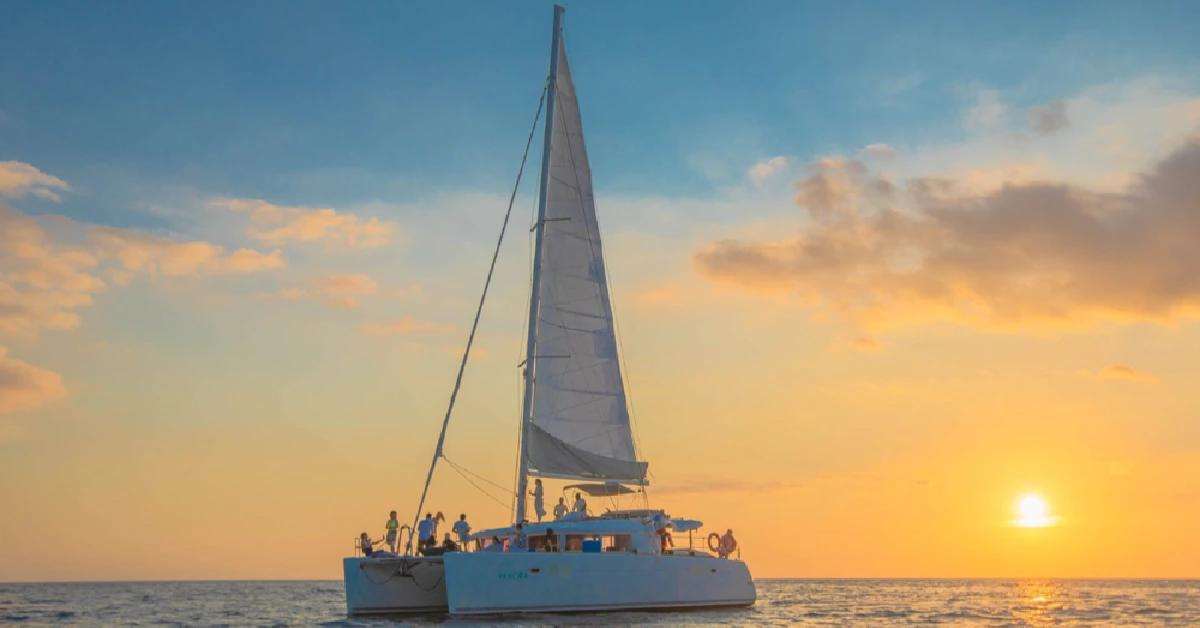
Top Activities
| Activity | Best Locations |
|---|---|
| Sea Kayaking | Phang Nga Bay, Koh Hong |
| Snorkeling | Phi Phi, Koh Mai Ton, Koh Racha |
| Sunset Cruises | Phuket, Phang Nga Bay |
Best Time to Visit
High Season (November – April): Calm seas, clear skies, ideal for water activities.
Green Season (May – October): Lush scenery, fewer crowds, lower accommodation prices.
Responsible Tourism Tips
- Avoid stepping on coral
- Do not litter in the sea
- Use reef-safe sunscreen
- Respect national park regulations
FAQ — Natural Wonders of Southern Thailand
Q: Why are Phuket, Phang Nga, and Krabi world-class destinations?
A: The region’s landscape has been shaped by over 250 million years of geological change, combining limestone islands, sea caves, lagoons, mangrove forests, and coral reefs — earning it recognition as one of the world’s Marine Biodiversity Hotspots.
Q: What is the best time to visit?
A: High Season (November–April) offers calm seas and clear skies, ideal for water activities. Green Season (May–October) features lush scenery, fewer crowds, and lower accommodation prices.
Q: What are the must-see natural landmarks?
A: Promthep Cape, Nai Harn Beach (Phuket), Phang Nga Bay, James Bond Island (Koh Tapu), Phi Phi Islands, and Talay Waek (The Emerald Cave Sandbar).
Q: What are the most popular activities in the region?
A: Sea kayaking (Phang Nga Bay, Koh Hong), snorkeling (Phi Phi, Koh Racha), and sunset cruises (Phuket, Phang Nga Bay).
Summary
Phuket, Phang Nga, and Krabi offer world-class natural diversity — from limestone mountains and mid-sea islands to stunning beaches. Key landmarks include Promthep Cape, Nai Harn Beach, Phang Nga Bay, James Bond Island, Phi Phi Islands, and Talay Waek, each with its own distinct character worth experiencing.