

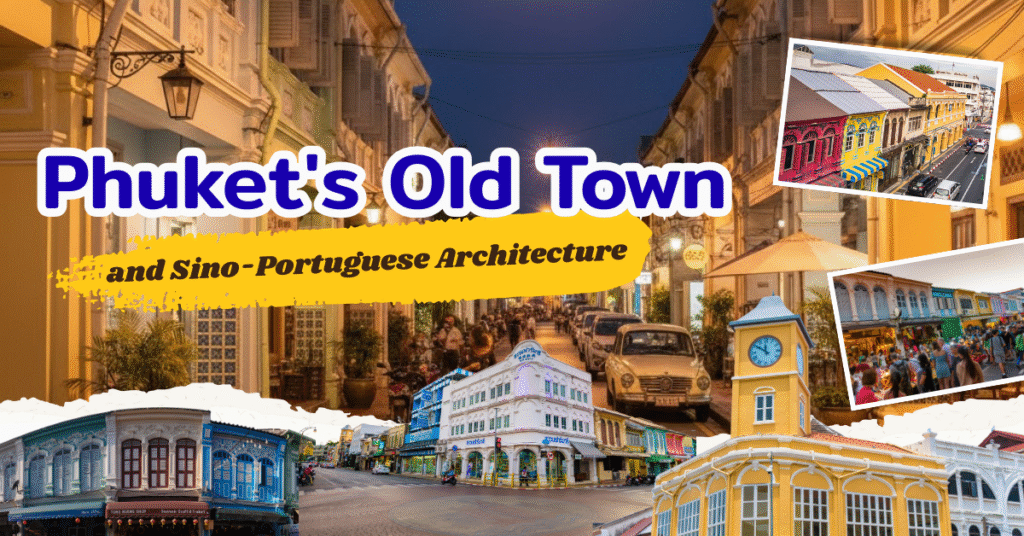
Phuket’s Old Town is not just a tourist attraction, but a space that comprehensively documents history, economy, and the identity of its people. What makes Phuket’s Old Town stand out unlike anywhere else in Thailand is its Sino-Portuguese architecture pastel-colored buildings, arched windows, tall doorways, and delicate stucco patterns. Every element clearly reflects the fusion of Chinese and Western cultures.
What is Phuket’s Old Town? Why is it historically significant?
Phuket’s Old Town is located in Mueang District and was once the island’s major commercial center. From the late 19th century to the early 20th century, Phuket was a prosperous tin mining town. Chinese merchants from Fujian and Guangdong provinces migrated here to settle, bringing with them their culture, beliefs, and construction styles.At the same time, Phuket traded with Europeans, particularly the Portuguese, British, and Dutch. This led to the adoption of Western architectural influences, which were then blended with Chinese structures, resulting in a building style called Sino-Portuguese.This marks the beginning of Phuket’s Old Town as we see it today.

What is Sino-Portuguese Architecture? Why is it so prevalent in Phuket?
Sino-Portuguese architecture is a building style that combines:
- Chinese structure and beliefs
- European artistic details and proportions
Phuket is one of the areas with the most complete Sino-Portuguese architecture in Thailand, thanks to the past mining economy that created wealth for Chinese merchants. Houses were therefore built elaborately, sturdily, and with an emphasis on appearance.
These buildings were not constructed solely for residence, but served as:
- Homes
- Shops
- Offices
- Warehouses
All were designed to suit both living and commerce in a tropical climate.
Distinctive Features of Sino-Portuguese Buildings in Phuket’s Old Town
When walking through the Old Town, you’ll notice recurring details in many buildings, which are characteristic of Sino-Portuguese architecture:
1. Narrow frontage but deep buildings Most buildings are shophouses—narrow frontage but considerable depth, designed for space efficiency, suitable for both commerce and residence in the same building.
2. European-style arched doorways Arched doors and windows are influenced by Western architecture, adding airiness and creating focal points for the buildings.
3. Intricate stucco patterns Stucco designs featuring flowers, vines, and geometric shapes reflect the craftsmanship of past artisans. Many patterns carry auspicious meanings according to Chinese beliefs, such as wealth, longevity, and prosperity.
4. Wooden windows and louvered shutters Louvered wooden windows provide excellent ventilation, suitable for Phuket’s hot and humid climate—an example of design that considers practical use.
5. Light-toned building colors Colors typically used include:
- Light yellow
- Blue
- Green
- Pastel pink
These colors make the Old Town look warm, photogenic, and create a welcoming atmosphere for visitors.

Important Streets in Phuket’s Old Town That Preserve Complete Sino-Portuguese Architecture
Thalang Road Thalang Road is considered the heart of Phuket’s Old Town, filled with well-preserved Sino-Portuguese buildings. Today it features local restaurants, cafés, and small museums. Every Sunday, this street becomes a walking street, attracting both Thai and international tourists.
Dibuk Road Dibuk Road connects Thalang Road and Phang Nga Road and is another street with many old buildings. The atmosphere is quieter, suitable for architecture viewing and photography.
Phang Nga Road Phang Nga Road is home to government buildings and old mansions, many with large-scale Sino-Portuguese architecture, reflecting the status and influence of their former owners.
Sino-Portuguese Architecture and Phuket People’s Way of Life
Buildings in Phuket’s Old Town are not just beautiful objects, but have been part of people’s lives for many generations.One house might serve as residence, shop, and ceremonial space. The central courtyard is used for auspicious ceremonies, ancestral rites, and important festivals. The house layout reflects the Chinese family structure.These elements make Sino-Portuguese architecture not merely a building style, but a living culture.

Conservation of Phuket’s Old Town: Community and Government Collaboration
Over the past several decades, conservation of Phuket’s Old Town has gained increasing attention from locals, academics, and government agencies.
Efforts include:
- Renovating buildings while maintaining original structures
- Establishing guidelines for colors and materials
- Promoting cultural tourism
The result is that Phuket’s Old Town remains vibrant—not becoming merely a museum, but a space where people actually live, work, and generate community income.
Why Phuket’s Old Town is a Must-Visit Destination for Tourists
- Learn history through actual buildings
- Easy to explore on foot in a short time
- Authentic local cuisine that’s hard to find elsewhere
- Photo opportunities all day long
- Close connection to local people’s way of life
Many tourists visiting Phuket are surprised to discover that beyond the beaches, Phuket also has an Old Town with a distinct national-level identity.

FAQ: Phuket’s Old Town and Sino-Portuguese Architecture
A: The Old Town represents Phuket’s prosperous tin mining era when Chinese merchants from Fujian and Guangdong provinces settled here and traded with Europeans (Portuguese, British, and Dutch). This cultural exchange created the unique Sino-Portuguese architectural style that defines the area today.
A: Sino-Portuguese architecture is a building style that combines Chinese structure and beliefs with European artistic details and proportions. It emerged from the cultural fusion between Chinese immigrants and European traders in Phuket.
A: The intricate stucco designs featuring flowers, vines, and geometric shapes showcase the craftsmanship of past artisans. Many patterns carry auspicious meanings according to Chinese beliefs, such as wealth, longevity, and prosperity.
Conclusion: The Value of Sino-Portuguese Architecture in Phuket’s Old Town
Phuket’s Old Town with its Sino-Portuguese architecture is a living historical record. Each building tells stories of people’s journeys, trade, and the profound fusion of cultures.Walking through Phuket’s Old Town is not just tourism—it’s understanding the city’s roots, understanding its people, and seeing the value of preserving cultural heritage for the future.If you’re looking for an experience beyond beachside relaxation, Phuket’s Old Town is a clear answer.
